Monitoring and Evaluating the Essential Public Health Functions EPHFs & Competences
About the Project
This international research initiative, coordinated by the International Council for Accreditation of Public Health Education (ICAPHE), aims to explore and understand the perspectives of stakeholders on the current state of public health education and the processes that support quality improvement.
It is vital to ensure that its policies and practices are informed by evidence. This research will support that aim by drawing insights from diverse global regions and experiences, ensuring that accreditation and quality improvement processes remain relevant, responsive and effective.
Why This Research Matters
The newly established EPHFs and associated competences represent a comprehensive reflection of modern public health practice. For public health education to remain effective globally, it must have a common language and embrace evolving expectations and thinking. Monitoring how institutions incorporate (or not) the EPHFs and key competences will help understand how the framework may help with addressing public health priorities, providing a common lexicon and equipping graduates with the skills required to meet complex global health challenges.
By analysing submissions, we can build an evidence base to guide future policy, curriculum development and accreditation processes. This research aims to further support continuous quality improvement across the sector and promote greater transparency and accountability.
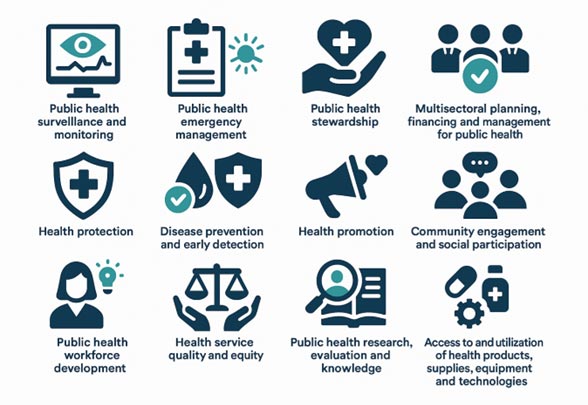
W.H.O. Essential Public Health Functions 2024
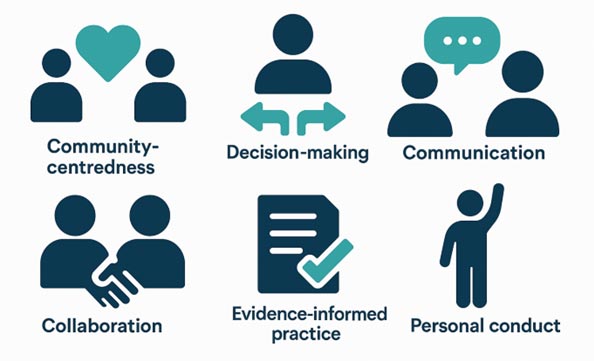
W.H.O. Public Health Competences 2024
What the Monitoring Covers
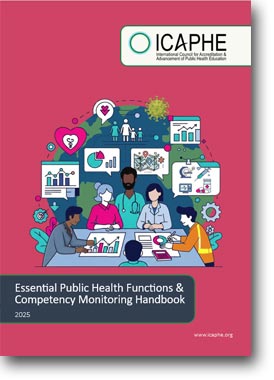
The handbook and monitoring tool are structured into four key sections:
- Target Audience
Institutions are asked to report on the professional backgrounds of their students or participants. This may include those working fully in public health, professionals delivering selected EPHFs as part of broader roles, or individuals in leadership and policy positions. Five standardised categories are used, as outlined in WHO guidance.
- Competences
This section covers 6 broad categories broken down into 20 core competences, reflecting behavioural, applied and cross-cutting aspects of public health practice. Institutions indicate which competences are integrated into their programmes or courses. These are further detailed in the WHO documentation.
- Essential Public Health Functions
Institutions identify which of the 12 EPHFs are embedded in their teaching and how these are applied. This may include core modules, electives or CPD components. Respondents are also invited to note where a function may not be relevant to their context. Full details are contained in the WHO documentation.
- Feedback
Participants are encouraged to reflect on whether the EPHFs and competences accurately capture the scope and intent of their programme or course. This feedback will inform future revisions of the monitoring tool and support the refinement of accreditation processes.
Be Part of This Research
By completing and submitting the Essential Public Health Functions & Competency Monitoring Handbook, your institution contributes to both accreditation and a wider research effort. These insights will support improved alignment between training and public health system needs, while helping build a stronger, more consistent standards and language for public health education worldwide.
Take part. Share your insights. Help strengthen public health education worldwide.
Estimated Project Duration: Ongoing
© ICAPHE 2025