ICAPHE accreditation is far more than a stamp of approval. It is a process in overall Quality Assurance and Improvement and the ongoing journey of continuous development in our Schools and Programmes.
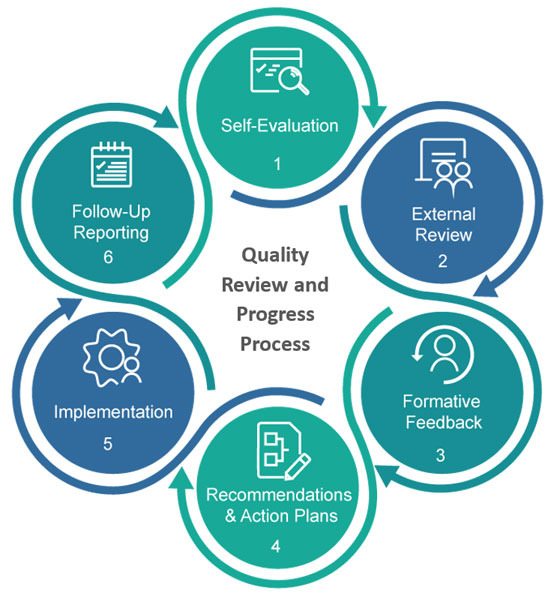
1. Self-Evaluation The process begins with a holistic and inclusive introspective self-evaluation of activities, processes and systems. The Self-Evaluation is based around a series of criteria which provide the applicant with a tool to institutionalise reflection through providing a framework to analyse existing thinking and practices.
2. External Review The second stage consists of independent reviewers assessing the School through analysis of the self-evaluation and meetings with key stakeholders. Their evaluation provides an objective perspective on the School’s quality but also where improvements might be sought.
3. Formative Feedback from Reviewers As part of the external review, reviewers provide constructive feedback on the School’s strengths and areas for development. This feedback helps support Schools in areas they are doing well and receive formative and objective advice for potential action in areas that may require review. These come in the form of recommendations or conditions.
4. Recommendations, Conditions and Action Plans Specific conditions and/or recommendations are provided with the objective of enhancing the School. These form the basis of action plans which can be used as part of the progress reports.
5.Implementation Phase The School puts the agreed action plans into practice, addressing the conditions and/or recommendations. (see below)
6.Follow-Up Reporting As part of the ongoing improvement activities, the School submits a follow-up report to demonstrate progress on the action plans. This report allows reviewers to assess whether the conditions and/or recommended improvements have been successfully integrated into the School or what challenges are being faced.
Additional Assistance
In addition to the above processes, there is also an optional meeting available with the reviewers at the end of the review to informally discuss potential areas for further development. This further review offers an in-depth objective view of the School which can be fed back into developmental aspirations of the School.
Quality Review and Progress Processes in action
ICAPHE accreditation is a formative model designed to help Schools improve over the longer term, so it is in the interest of the School that accreditation is used as a tool to support them moving forward. It is important to distiguish between recommendations and conditions. In the case of conditional accreditation the Accreditation Review Panel defines “conditions” that must be implemented for obtaining accreditation. This is different from recommendations which do not have a mandatory nature.
It is strongly advised that the School undertakes a small feasibility study and needs assessments to ensure that the practicability of the recommendations suits its needs before reporting back if it accepts the recommendation and how it will be implemented.
In all cases, each review recommendation or condition made should be addressed and reported back on. The system used is found in the table below and consists of identifying actions to take along with indicators for success as well as persons responsible and timeframes. The follow-up reporting will vary depending on the accreditation decision.
Condition/Recommendation | Action to take | Completion date | Actioned by | Indicator |
Condition or recommendation made by the review team | Action taken as result of condition or recommendation | Date for action to be completed | Persons or group responsible to undertake action | Indicator for success (KPI) |
Table 1: Action plan outline for reporting